

A debate is an activity in which students analyse a given topic, problem or case, set out their own position and respond to what other students have said.
Its aim goes beyond collecting as many opinions as possible. A debate should produce an exchange of arguments, bring different positions into contact with each other and lead the group towards shared conclusions. Along the way, students develop critical thinking, the ability to argue a case and the ability to work as a group. It pairs well with other analytical activities, such as a case study.
The lecturer’s role in a debate
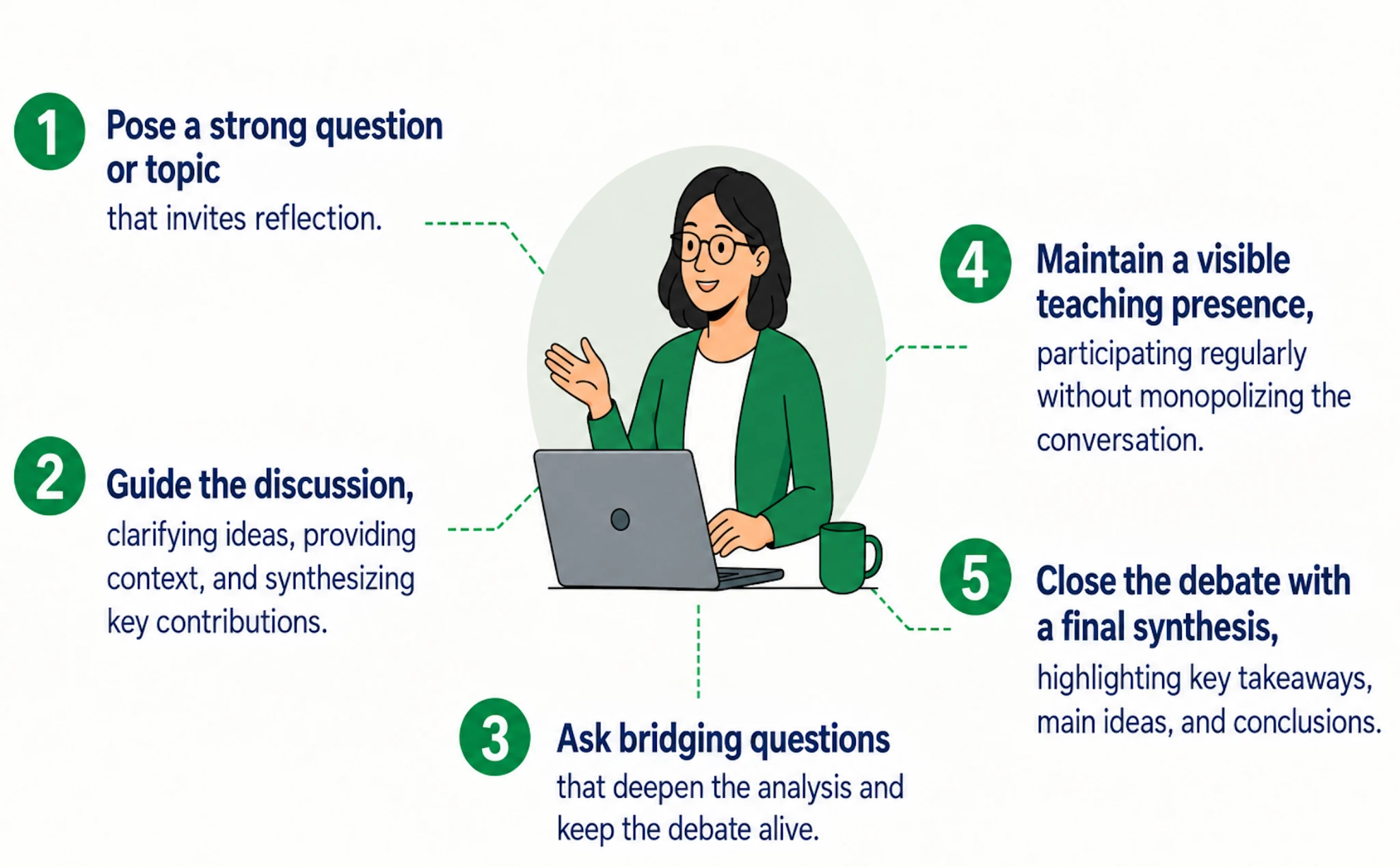
A debate belongs to the students, though the lecturer should still be visible in it. Their main job is to moderate the discussion and give it direction, which means appearing regularly and helping students take the conversation further, rather than replying to every post. The figure below shows the basic roles of a lecturer running a debate:
The most common mistakes in running a debate
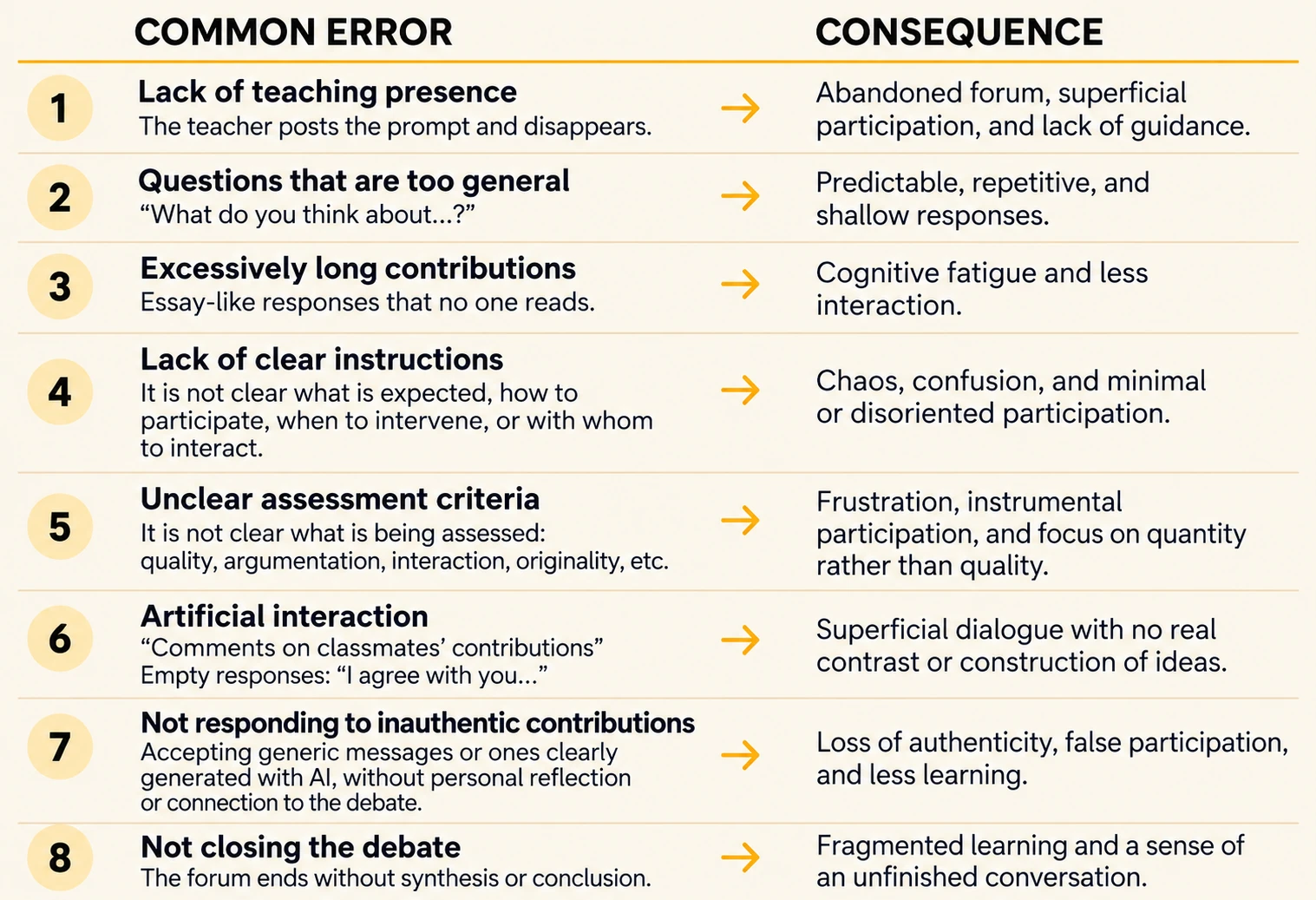
The first mistake is a question that is too general, for example “What do you think about …”. A question like that produces a short, predictable answer instead of a real discussion. A related mistake is asking students to answer several questions at once, which scatters their attention. Instead of staying with one thread and going deeper into the argument, the student answers a little of each.
Another mistake is the lecturer’s absence. If the person running the course only publishes the topic and then takes no part in the debate, the forum can quickly turn into a collection of separate, unconnected statements.
Allowing students to write very long posts causes similar trouble. When someone publishes several hundred words at once, others do not want to read them or reply. What emerges is a series of short essays instead of a discussion.
A lack of clear participation rules is just as common. When a student does not know how many times to post, whether to reply to other students, or whether to answer the lecturer’s follow-up questions, there is little reason to expect much engagement.
Unclear assessment criteria discourage participation in the same way. Students should know from the start how their part in the debate will be assessed and against which criteria.
It is also worth watching for artificial interaction, the “I agree with you” post with nothing to support it. It counts formally as a contribution while adding nothing to the debate. The authenticity of what students write matters too. Posts generated by AI, carrying no reflection of the student’s own, are appearing more often. If the lecturer accepts them without any response, the debate loses its value and what remains is simulated participation and disengaged students.
Finally, avoid letting the debate simply stop when its deadline passes. Closing it abruptly can leave students feeling that it ended unfinished. Close it with a short summary instead, pointing out the different positions that appeared during the debate and the main conclusions the group reached.
Good instructions are the basis of student engagement
Before the debate starts, students should know exactly how they are expected to take part. A good set of instructions states:
- the topic or question for discussion,
- the opening and closing dates,
- the minimum number of posts of their own,
- the minimum number of replies to other students,
- the maximum number of words per post,
- the assessment rules.
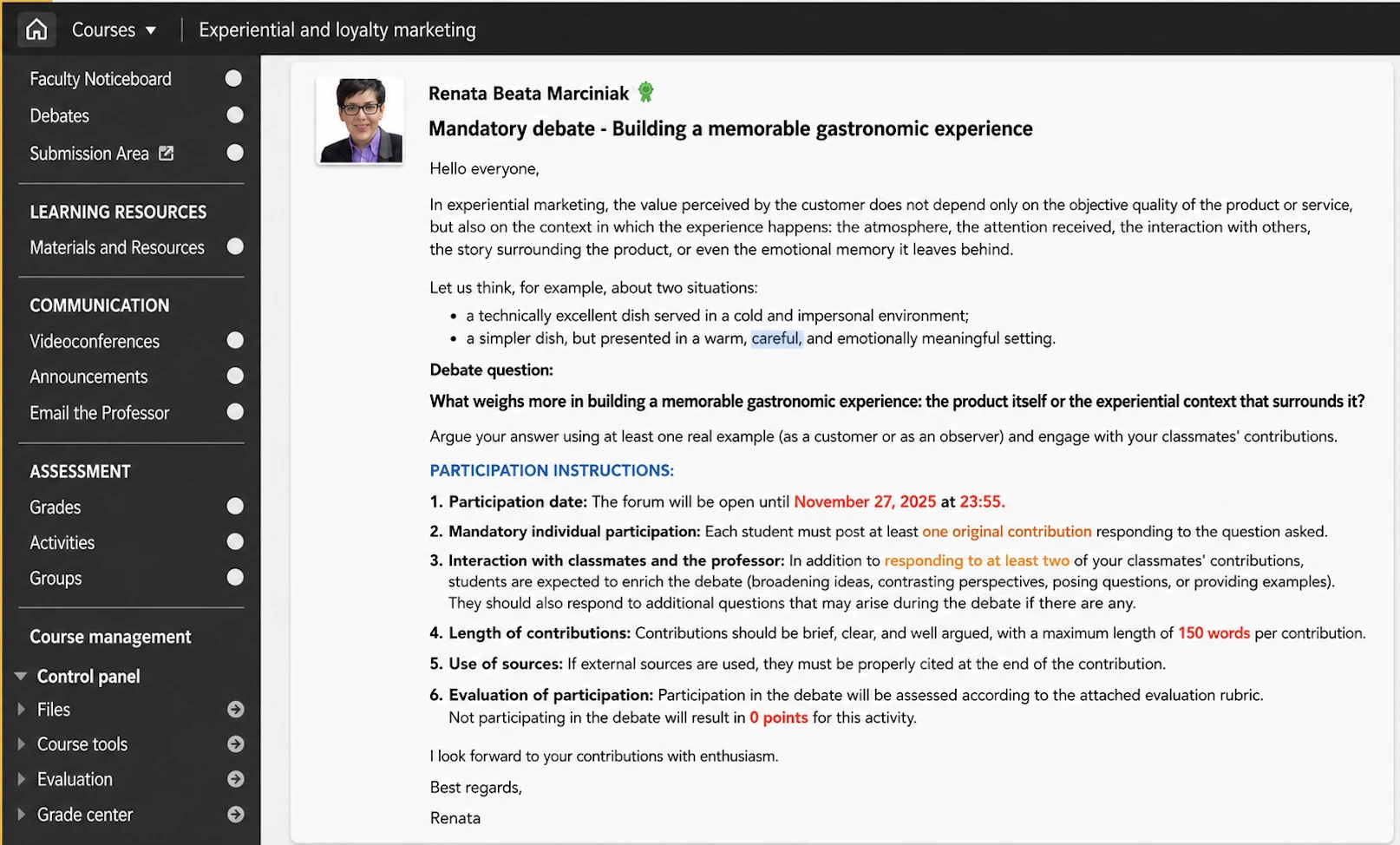
Below is a real set of instructions for an online debate, published on a virtual campus by a lecturer. You can use it as a model for your own.