


A well-planned class is more than a list of topics the lecturer wants to cover. It also needs a plan showing what will happen during the lesson, what the students will do and how we will check what they have learned. That is the job of a lesson plan.
What is a lesson plan?
A lesson plan is a structured document setting out in detail how a single class (a lesson or session) will be run. Its purpose is to organise the content, resources and activities needed to reach the goals you have set.
It sits within a family of three documents:
- Syllabus / Guía Docente, which describes the whole subject: its goals, competences, learning outcomes, content, teaching methodology, assessment rules and bibliography.
- Teaching Plan, which shows how a whole module or subject will be delivered across individual weeks or sessions.
- Lesson Plan / Session Plan, which goes one level lower and answers the question of what will happen during one specific lesson or session.
A good lesson plan sets out what the students have to do in order to learn, rather than what the lecturer intends to say.
What should a good lesson plan contain?
There is no single obligatory template, but in practice it is worth including:
- learning goals,
- content,
- the stages of the lesson,
- student activities, separated into individual and group work,
- what the lecturer will do,
- materials and resources,
- the time allocated to each stage,
- how you will assess what the students have learned,
- a summary or closing reflection.
What matters most is connecting these elements logically, rather than simply entering them into a table. Activities such as a classroom debate or a case study fit naturally into the application stage.
Why does the sequence of activities matter?
A class leads to learning more easily when the individual activities form a coherent sequence instead of arriving at random. A simple pattern might be:
activating prior knowledge → introducing new content → applying the knowledge → reflection and checking what was learned
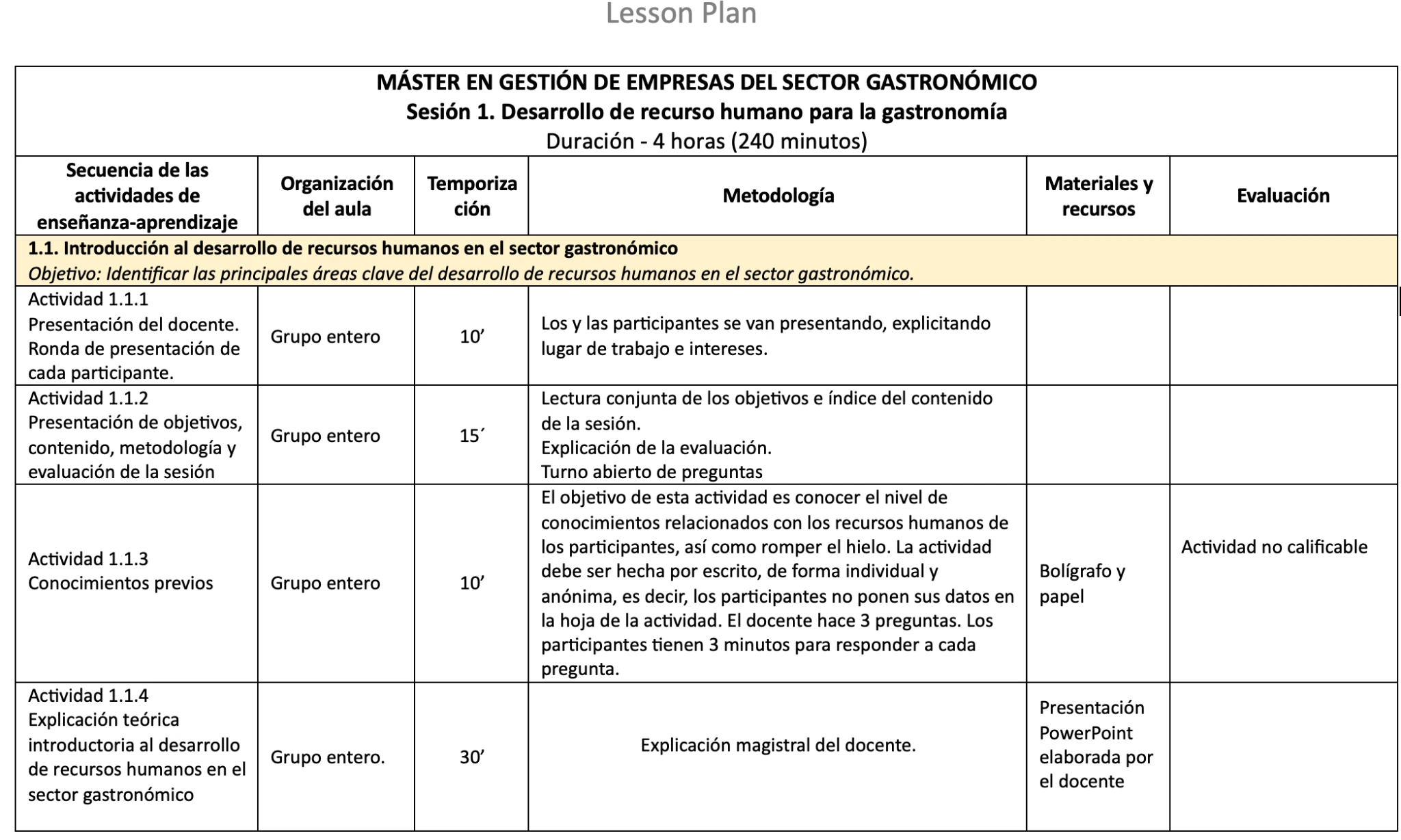
The lesson plan below illustrates this well. It covers a four-hour session, Desarrollo de recurso humano para la gastronomía, from the course Gestión de Empresas del Sector Gastronómico.
Download the example lesson plan (DOCX, English version)
The session opens with brief introductions from the lecturer and the participants. The lecturer then presents the goals, content, methodology and assessment for the session and leaves time for questions. Next comes a diagnostic activity, Conocimientos previos. Students answer three questions about human resources individually, in writing and anonymously, which lets the lecturer gauge their prior knowledge before moving on to new content.
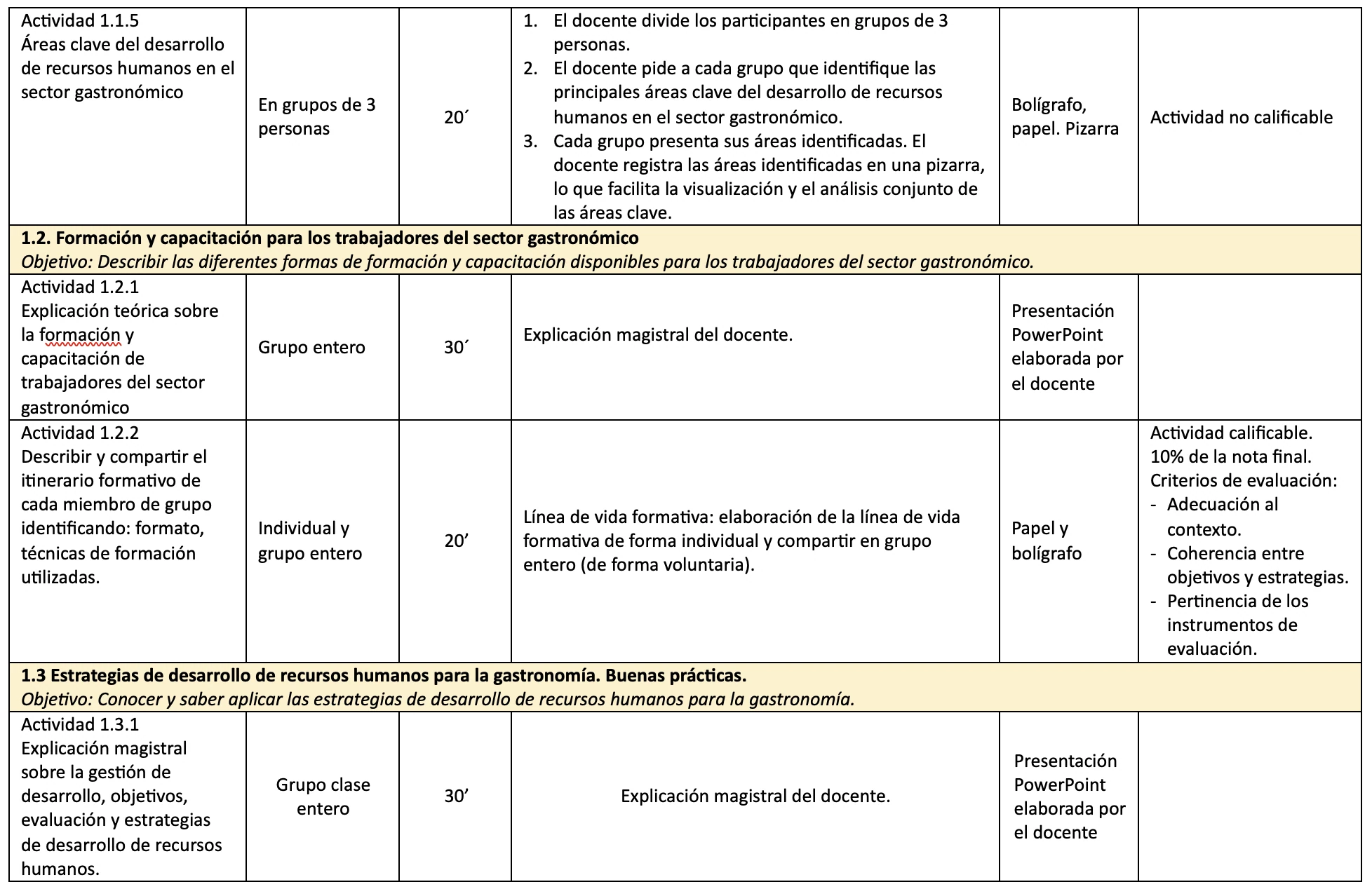
After a short theoretical introduction to human resource development in the gastronomy sector, students move into small groups. Their task is to identify the key areas of human resource development in gastronomy. Each group then presents its suggestions and the lecturer writes them on the board, which allows the results to be compared and analysed together.
The next block begins with a short explanation of educating and training staff in the gastronomy sector. Students then carry out the activity Itinerario formativo. Each participant individually maps their own line of educational experience, identifying forms and techniques of learning, and later shares it with the whole group on a voluntary basis. This activity is assessed and counts for 10% of the final grade.
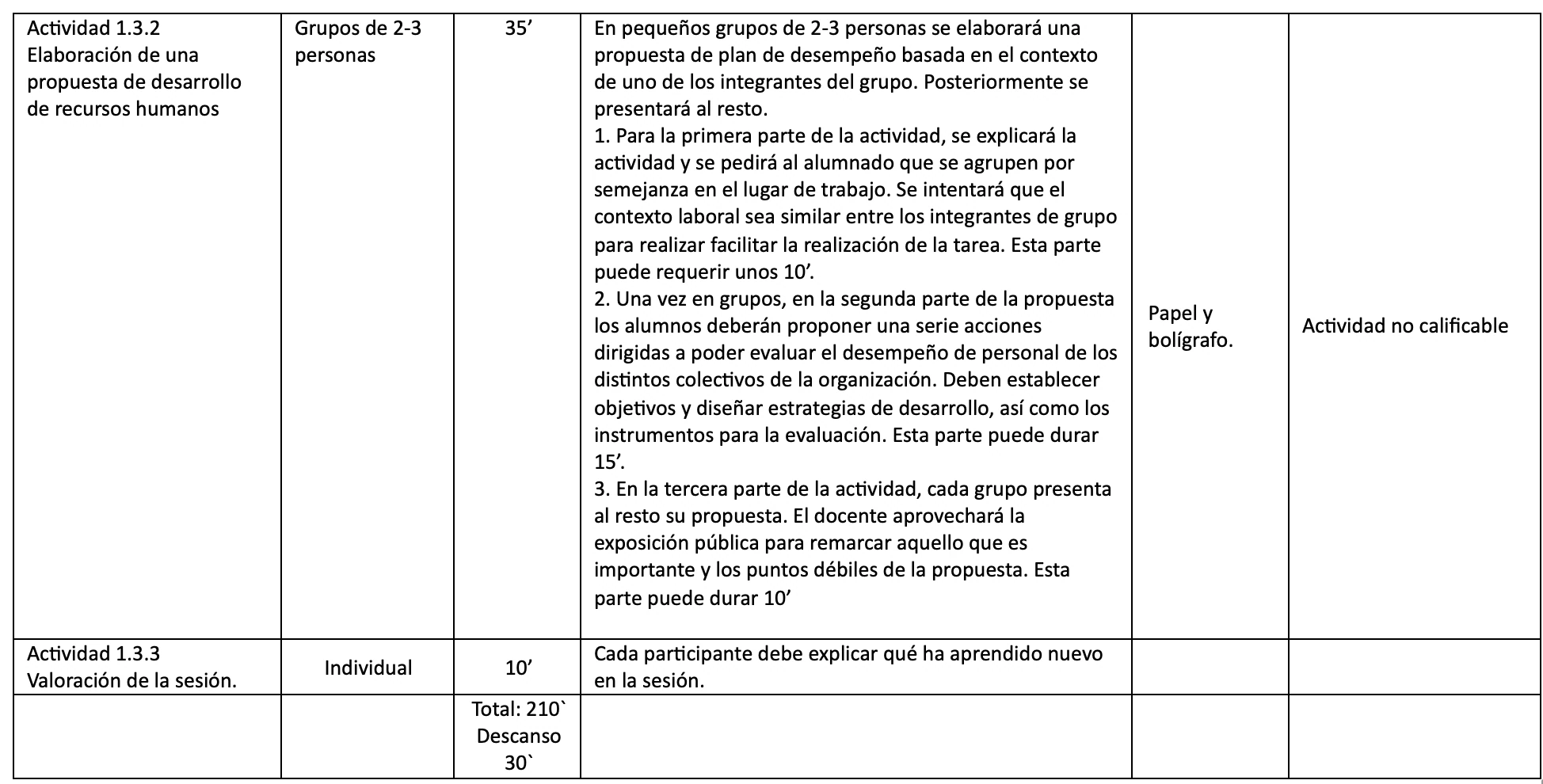
The lecturer then introduces human resource development strategies, goals and evaluation. Students work in small groups on a proposed development plan based on the professional context of one of the participants. They set goals, propose development activities and strategies, and suggest instruments for assessing staff. Each group presents its proposal at the end, and the lecturer points out its stronger and weaker elements.
The session closes with a short individual reflection. Each participant answers the question of what new thing they learned during the class. This makes the final stage a review of their own learning process rather than a place for new content.
A checklist before class
Before the session starts, it is worth checking:
- Do I know what students should know or be able to do once the lesson ends?
- Does every activity lead towards that goal?
- Does the plan show what the students will do as well as what I will do?
- Is the order of the activities logical?
- Have I allowed a realistic amount of time for each stage?
- Is it clear how students should work and which materials they should use?
- Have I planned a way to check what they have learned?
- Have I planned a summary or closing reflection?
A good lesson plan does not have to be complicated. It should let the lecturer look at the class from the students’ point of view and answer one basic question: what do they have to do during this lesson in order to genuinely learn?