


Many students know what topic they want to study, but they do not know how to organize the research process. This is where research design becomes important.
What is research design?
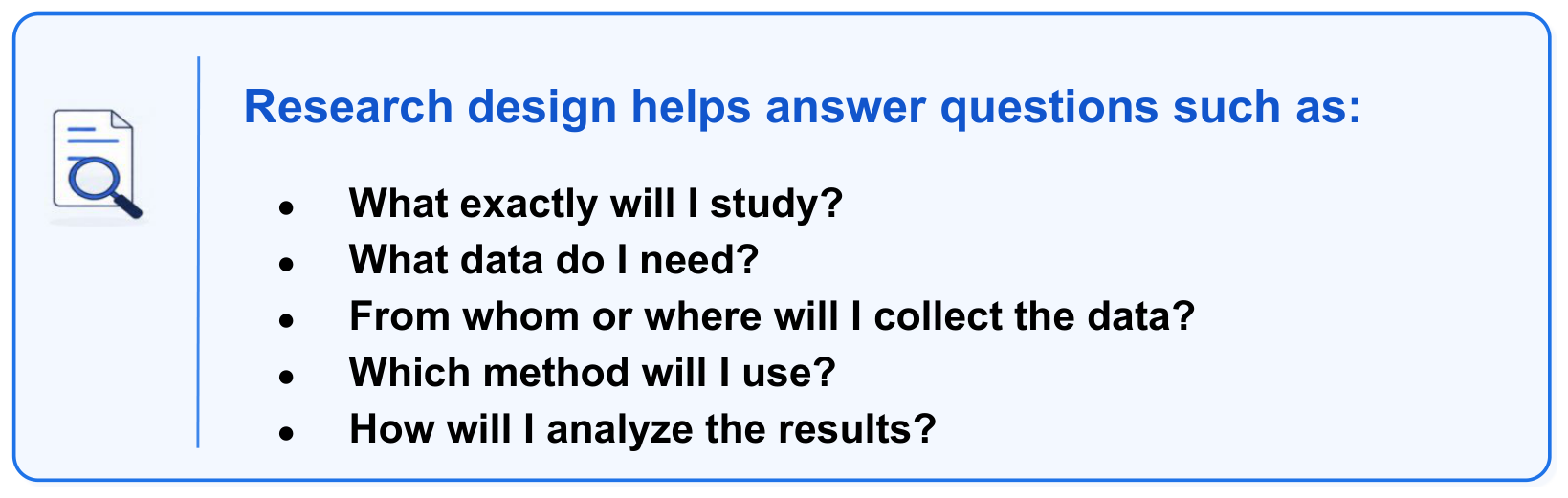
Research design is the plan of a study. It explains how the research will be conducted in order to answer the research question.
It connects the research problem, research objectives, research questions, methods, data collection and data analysis.
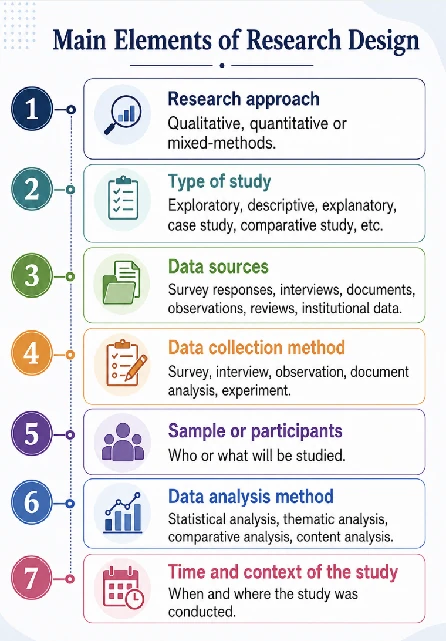
Main elements of research design
Before choosing specific methods, you need to understand what a research design includes and where it belongs in a research paper. Many students confuse research design with the introduction because both parts are connected to the research problem and research questions. However, they have different roles. The introduction explains what the study is about and why it is needed, while the research design explains how the study will be planned and conducted in order to answer the research question.
In other words, research design shows the practical structure of the study. It helps the researcher decide what type of data will be needed, where the data will come from, who or what will be studied, and how the data will be analyzed. The main elements of research design are presented below.
Types of research design
There are different types of research design, depending on the purpose of the study. The most common are:
1. Exploratory research design Used when the researcher wants to explore a new or not well-understood topic.
2. Descriptive research design Used when the researcher wants to describe a situation, group, behavior or phenomenon.
3. Explanatory research design Used when the researcher wants to explain relationships between variables or understand why something happens.
4. Comparative research design Used when the researcher wants to compare two or more groups, cases, countries, institutions or situations.
5. Case study design Used when the researcher wants to analyze one specific case in depth, such as one company, restaurant, university or project.
6. Experimental research design Used when the researcher wants to test the effect of one variable on another under controlled conditions.
Each type of research design has a different purpose. Exploratory design helps to understand a new topic, descriptive design presents what is happening, explanatory design shows why something happens, comparative design identifies similarities and differences, case study design analyzes one case in depth, and experimental design tests cause-and-effect relationships. Choosing the right type of research design is important because it helps make the study clear, logical and possible to conduct.